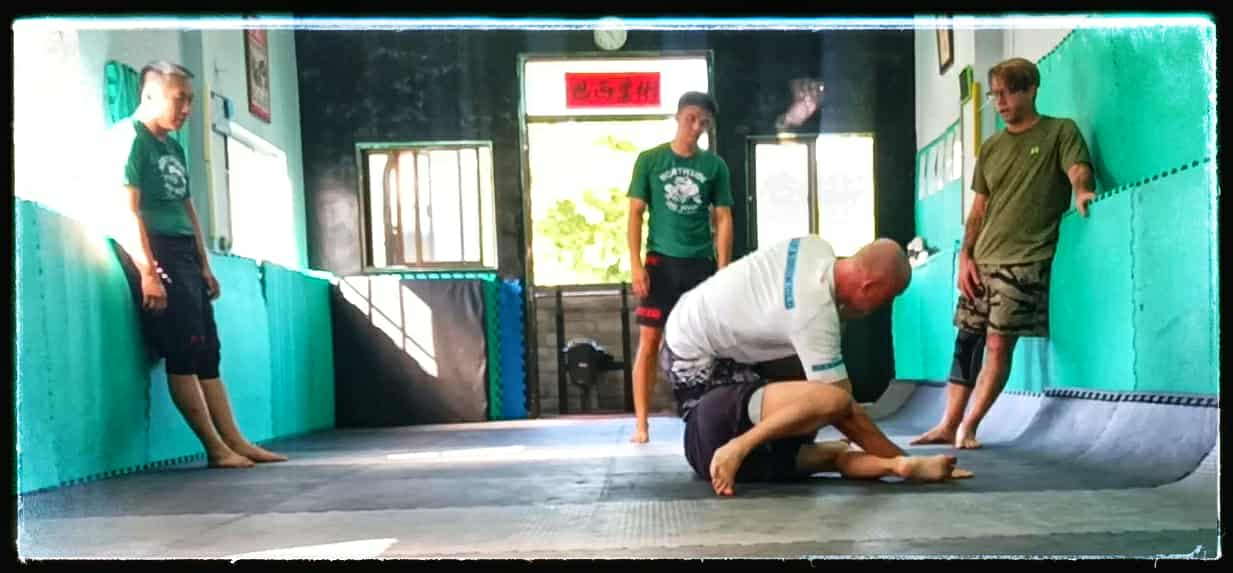
Has self-defense become the dirty word of Brazilian Jiu-Jitsu? Some days it feels that way, especially with all the hype surrounding modern sport Jiu-Jitsu promotions.
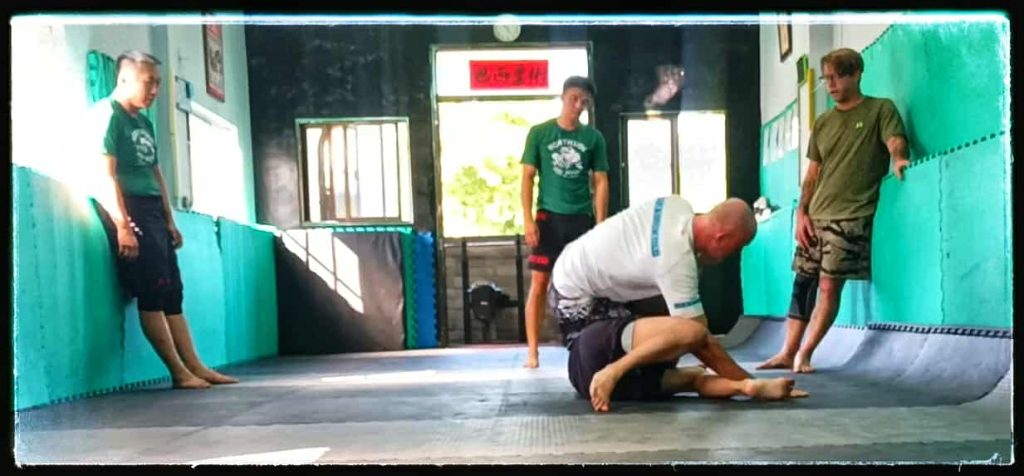
But let’s be honest:
Does your gym actually practice self-defense techniques on a regular basis? Is there any kind of curriculum? And when you do practice, is it all compliant drilling, or do you incorporate real resistance?
It’s tempting to give the easy answer—“the truth is somewhere in the middle.” Without context, though, “somewhere in the middle” is no answer at all.
A lot of people still think of self-defense training as a scripted exchange: a specific response to a specific attack, executed by a training partner who cooperatively ensures a positive outcome. Critics of this approach argue that the lack of resistance makes the training unrealistic.
To that I say: slow is smooth, smooth is fast. You can always add resistance and variables. Good self-defense training doesn’t have to be rigid or outdated; it can involve the same problem-solving, experimentation, and learning-through-failure that modern submission grapplers experience every day.
I’ll also add—after collecting more than my share of injuries over the years—that I now practice self-defense in every roll, because at this point, I’m literally defending myself.
So no, I don’t think “self-defense” is a dirty word. I think it’s a reminder that Jiu-Jitsu is a multi-faceted animal, full of layers, and that each of those layers offers something valuable.
No responses yet